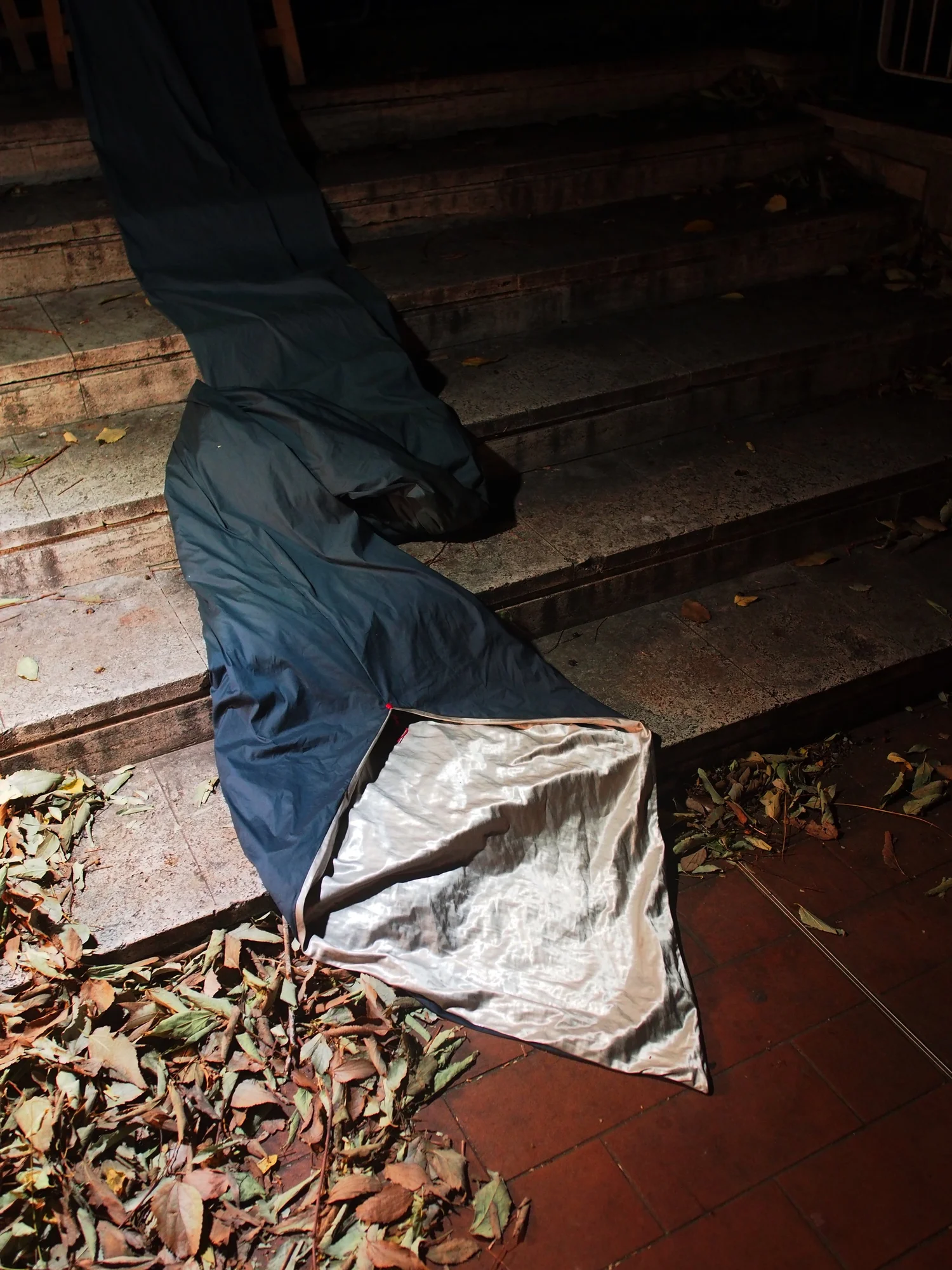
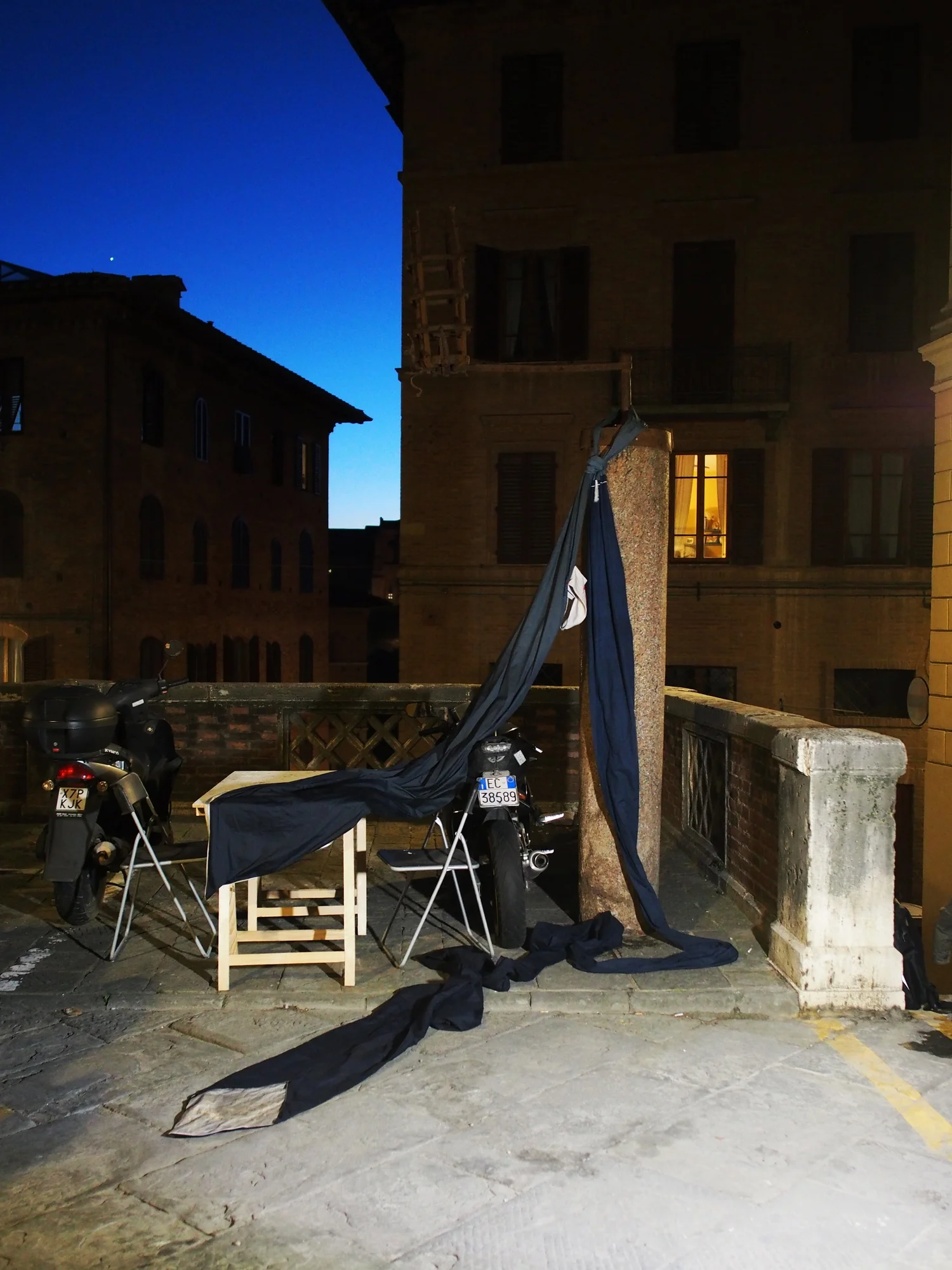
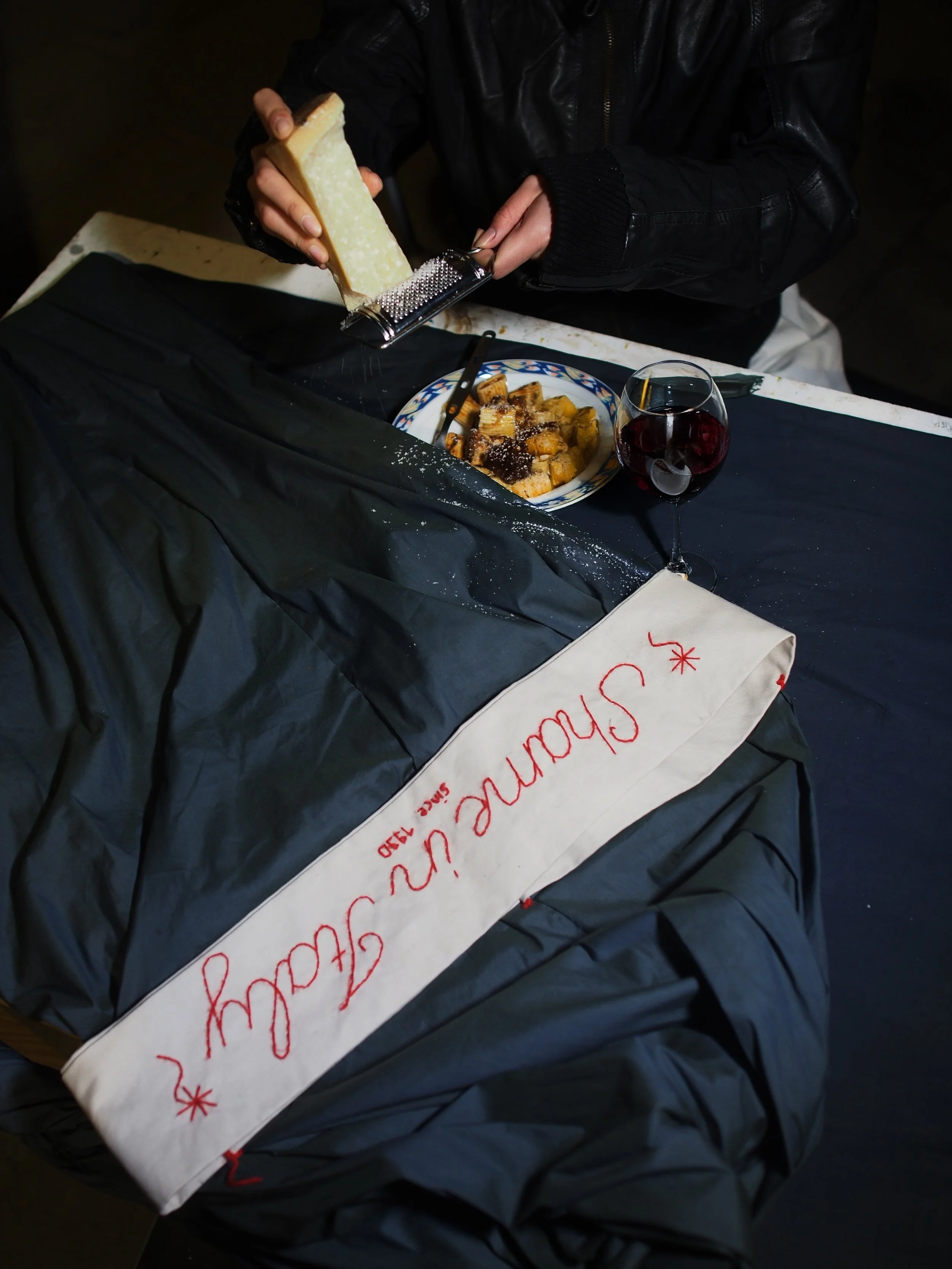
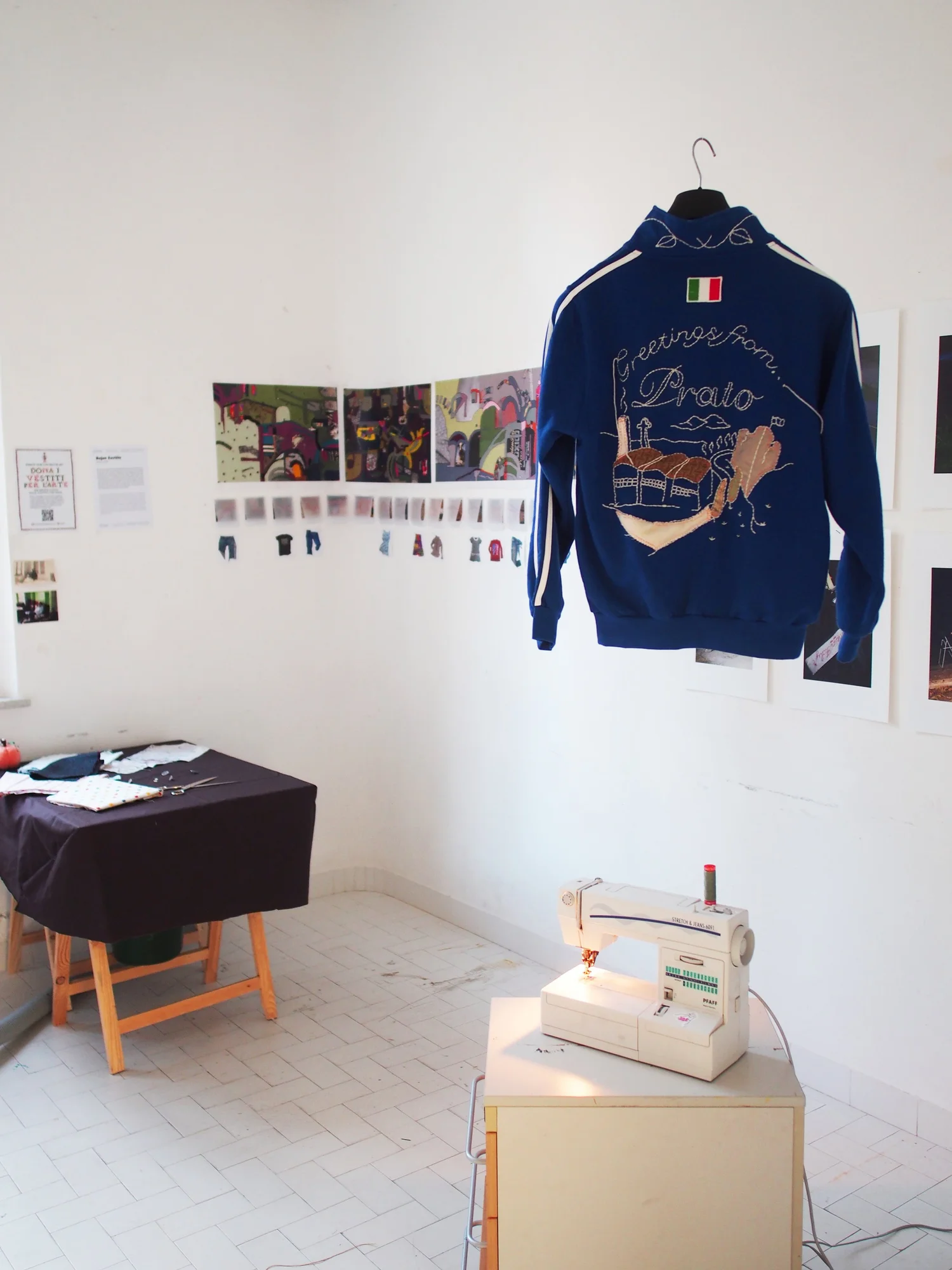
upscaled 20m-long tie as an urban intervention, performance object and demonstration sign in collaboration with the organization for italian imigrants in the textile sector in prato.
Created during my three-month residency at the Siena Art Institute in Tuscany.
The factory where Ahmed works also produces many ties.
He doesn’t wear ties—he doesn’t like them.
His superiors wear them, a sign that they are 10 times taller than he is.
Ahmed (name changed) is 32 years old and comes from Callum, Egypt.
He moved to Italy in 2017 for better opportunities in life and wealth.
He started working at a textile company in southern Prato as a logistics helper.
For the first five years, he worked there illegally, without permission.
He works six days a week, 10 to 11 hours a day.
What does it really mean when something is "Made in Italy"?
Life circumstances like Ahmed’s are "Made in Italy."
Ahmed founded an undercover workers' organization called "Shame in Italy" to organize demonstrations and spread hidden messages, fighting against the exploitation of foreign workers in the Prato area.
But the biggest battles take place at the desks of his superiors,
who always seem to be 10 times taller.
materials:
leftover textiles from factorys in Prato, IT
photo credits:
Leon Theodor